If you have lots of tiny bugs in your bathroom, the most likely cause is excess moisture, damp organic material, dirty drains, mold, or consistently wet areas. The exact solution depends on what you're seeing.
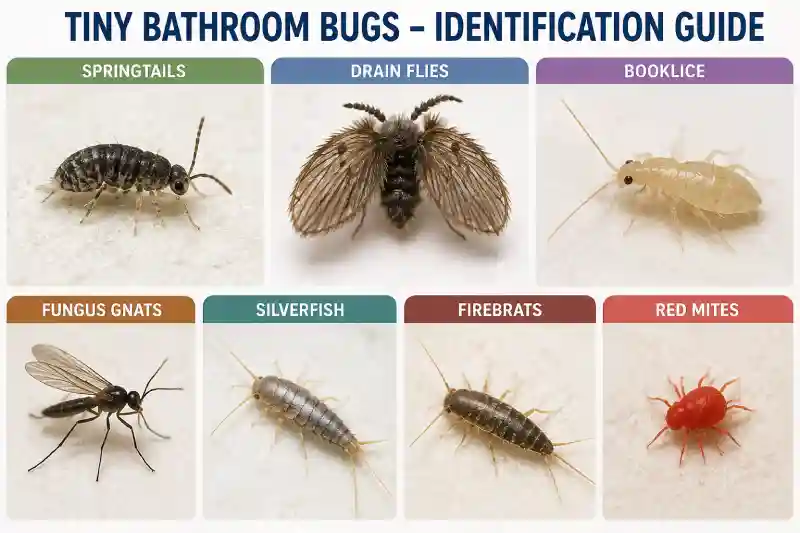
Springtails are tiny, wingless bugs that jump and usually indicate excess moisture; drain flies are small, fuzzy flies associated with organic buildup in drains; booklice are linked to humidity and mold; while silverfish, firebrats, and fungus gnats have different causes.
The most effective approach is to identify the bug, find its source, remove the moisture or breeding site, clean the affected area, and prevent the conditions from returning.
What Are the Tiny Bugs in My Bathroom?
"Bathroom bugs" can refer to several different pests. Their appearance and behavior provide the quickest clues.
| Bug | What It Looks Like | Wings | Common Location | Main Cause |
|---|---|---|---|---|
| Springtails | Tiny white, gray, black, or brown specks | No | Damp floors, tubs, walls | Excess moisture |
| Drain flies | Tiny fuzzy or moth-like flies | Yes | Drains and sinks | Organic drain buildup |
| Booklice | Extremely tiny, pale insects | Usually no | Damp walls, cabinets | Humidity and mold |
| Fungus gnats | Tiny mosquito-like flies | Yes | Near plants | Wet potting soil |
| Silverfish | Silver, elongated, fast-moving | No | Dark, damp areas | Moisture |
| Firebrats | Gray-brown, silverfish-like | No | Warm, humid areas | Heat and moisture |
The easiest clues to remember - Quick Identification
| What you see | Most likely possibility | First thing to check |
|---|---|---|
| Tiny bugs that jump | Springtails | Moisture |
| Tiny black flying bugs | Drain flies or fungus gnats | Drains/plants |
| Tiny black crawling bugs | Springtails or another small pest | Damp areas |
| Tiny brown elongated bugs | Silverfish/firebrats | Humidity and hiding places |
| Tiny gray jumping bugs | Springtails | Leaks and condensation |
| Tiny gray elongated bugs | Silverfish/firebrats | Damp, dark areas |
| Tiny red dots | Small mites | Windows/plants/outdoor entry |
| Tiny fuzzy flies near a sink | Drain flies | Organic drain buildup |
| Tiny flies near plants | Fungus gnats | Wet potting soil |
| Tiny pale bugs on damp surfaces | Booklice/springtails | Humidity and mold |
Tiny Bugs in the Bathroom With No Wings
If the bugs have no visible wings, focus on springtails, booklice, silverfish, and firebrats.
Springtails
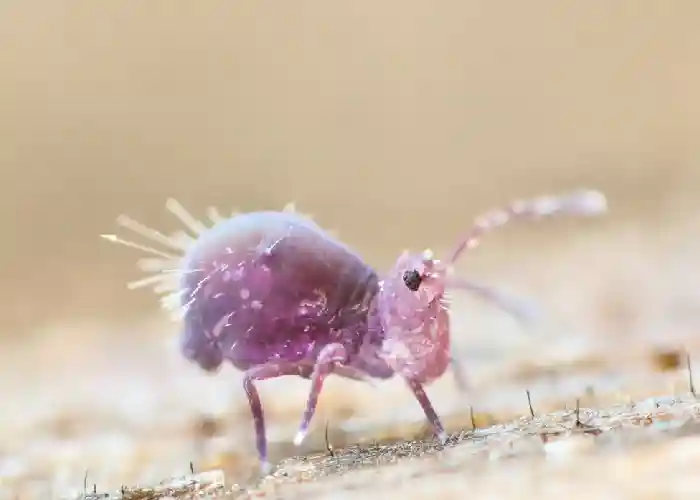
Springtails are among the most common explanations for very tiny, wingless bugs in damp bathrooms.
They are usually:
- Less than 1/8 inch long
- White, gray, black, brown, or bluish
- Wingless
- Fast-moving
- Able to jump when disturbed
Springtails are attracted to moisture, fungi, decaying organic material, and damp surfaces.
Are springtails harmful?
Usually, no.
They generally:
- Do not bite people
- Do not sting
- Do not infest people or pets
- Do not cause structural damage
Their presence is more useful as a moisture warning sign.
If you see many springtails, focus on drying the bathroom rather than repeatedly spraying the insects.
Booklice
Booklice, also called psocids, are extremely small insects that prefer humid environments.
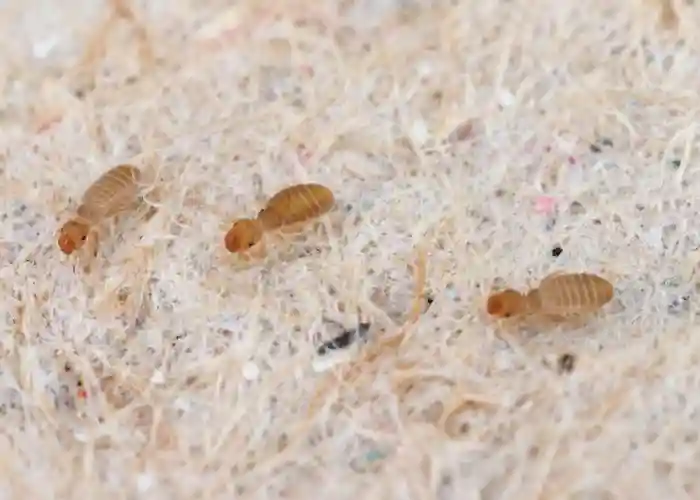
You may find them around:
- Damp bathroom walls
- Cabinets
- Window frames
- Paper or cardboard
- Areas with condensation
- Mold-prone surfaces
They are usually more of an environmental indicator than a serious pest.
How to control booklice?
The priority is reducing:
- Humidity
- Condensation
- Mold
- Damp storage materials
Simply killing visible booklice will not solve the underlying moisture problem.
Silverfish and Firebrats in Bathrooms
Silverfish and firebrats are easy to confuse because both have elongated, wingless bodies.
Silverfish
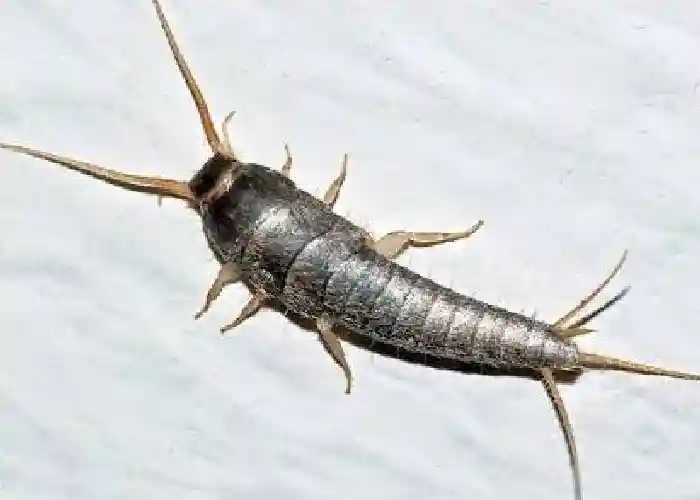
Silverfish typically have:
- Silvery-gray scales
- Long antennae
- Three tail-like appendages
- A tapered body
- Very fast movement
They prefer damp, dark locations and are commonly encountered in bathrooms, basements, and storage areas.
Firebrats
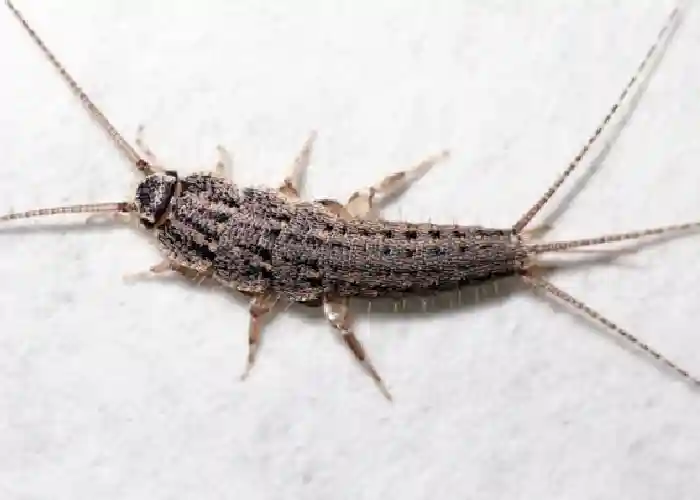
Firebrats look similar but tend to prefer warmer conditions.
They may occur near:
- Hot plumbing
- Water heaters
- Warm walls
- Heating equipment
- Humid bathrooms
Main difference
Silverfish prefer cooler damp areas, while firebrats are more associated with warm, humid environments.
For both, moisture reduction and eliminating hiding places are important parts of control.
Check out our best Pest Identifier tool for identification of bugs.
Very Tiny Bugs in the Bathroom: How to Identify Them?
When insects are too small to identify easily, don't rely on size alone.
Use these five clues.
1. Do They Jump?
A tiny insect that suddenly jumps when disturbed is a strong clue for springtails.
2. Do They Fly?
Flying insects narrow the possibilities.
- Near drains → drain flies
- Around plants → fungus gnats
- Around windows/lights → other small flying insects may be involved
3. What Color Are They?
- White/pale: booklice or some springtails
- Black/gray: springtails or small flies
- Silver: silverfish
- Brown/gray: firebrats or other small insects
4. Where Are They Concentrated?
Location can be more useful than size.
Check whether they're concentrated around:
- Sink
- Shower
- Bathtub
- Floor drain
- Toilet
- Cabinets
- Window
- Houseplants
- Baseboards
5. When Do You See Them?
Repeated nighttime activity can point toward moisture-loving or nocturnal insects such as silverfish.
Why Are There Lots of Tiny Bugs in My Bathroom?
The bathroom provides exactly what many small pests need: water, humidity, shelter, and organic material.
Excess Humidity
A bathroom that stays humid long after a shower creates favorable conditions for moisture-loving pests.
Common causes include:
- Poor ventilation
- Weak exhaust fan
- No bathroom fan
- Frequent hot showers
- Condensation
- Damp walls
Dirty Drains
Drain flies can develop where organic material accumulates inside drains and traps.
Hair, soap residue, skin cells, grease, and other organic debris can create a suitable breeding environment.
Plumbing Leaks
A slow leak underneath a sink or around a toilet may remain unnoticed for weeks.
Check for:
- Wet cabinets
- Damp flooring
- Water stains
- Musty odors
- Soft wood
- Persistent condensation
Mold and Fungal Growth
Mold and fungi can provide food or favorable conditions for tiny moisture-associated insects, particularly springtails and booklice.
Wet Bath Mats and Towels
Constantly damp fabrics can contribute to the overall moisture problem.
Houseplants
Overwatered plants can support fungus gnats and springtails.
How to Get Rid of Tiny Bathroom Bugs?
If you're wondering how to get rid of tiny bathroom bugs, start by identifying what you're seeing. Tiny black, brown, gray, red, jumping, or flying bugs require different treatments.
For most bathroom pests, the real solution is to remove the condition attracting them—especially excess moisture, dirty drains, mold, leaks, or damp organic material—rather than repeatedly spraying the visible bugs.
Use the appearance and behavior below to narrow down the problem.
Get Rid of Tiny Bugs in the Bathroom Sink
Tiny bugs around a bathroom sink often point to moisture or a drain-related source.
Start with these checks:
- Remove debris from the sink and drain opening.
- Clean the drain stopper and surrounding area.
- Check the overflow opening for buildup.
- Inspect underneath the sink for leaks.
- Clean organic buildup inside the drain where accessible.
- Keep the sink and cabinet completely dry.
- Monitor the area for several days.
If the bugs are tiny, fuzzy, and flying around the drain, drain flies are a strong possibility. Their larvae can develop in the organic film that accumulates inside drains.
If the bugs crawl rather than fly, inspect for moisture around the sink, cabinet, plumbing connections, and wall.
Get Rid of Tiny Black Bugs in the Bathroom
Tiny black bathroom bugs can be several different pests, so color alone isn't enough for identification.
Common possibilities include:
- Springtails — tiny, wingless bugs associated with moisture
- Drain flies — tiny dark, fuzzy flies around drains
- Fungus gnats — small dark flies around damp plant soil
- Other moisture-associated insects
What to do
Look at their behavior first:
- Jumping: investigate springtails.
- Flying around drains: investigate drain flies.
- Flying around plants: check for fungus gnats.
- Crawling around damp surfaces: investigate moisture and mold.
Don't automatically use insecticide simply because the bugs are black. Finding the source is more important than the color.
Get Rid of Tiny Black Bugs in the Bathroom Sink
If tiny black bugs are concentrated around your sink, inspect the drain and plumbing first.
If they are flying:
Check for:
- Organic drain buildup
- Dirty drain surfaces
- Overflow buildup
- Moisture inside the drain
- Nearby plumbing leaks
If they are crawling:
Check:
- Under the sink
- Around the faucet
- Along the backsplash
- Around cabinet edges
- Under the vanity
- Around pipe penetrations
A recurring population usually means the area is providing food, moisture, or shelter.
Get Rid of Tiny Jumping Bugs in the Bathroom
Tiny bugs that jump rather than fly are commonly associated with springtails.
Springtails are usually:
- Extremely small
- Wingless
- Gray, black, white, brown, or bluish
- Found in damp locations
- Able to jump when disturbed
The best way to control them
Dry the bathroom.
Focus on:
- Fixing leaks
- Improving ventilation
- Running the exhaust fan
- Drying wet floors
- Removing damp bath mats
- Reducing condensation
- Checking under cabinets
- Correcting overwatered plants
Spraying individual springtails may kill what you see, but it won't solve the environmental condition supporting them.
Quick clue: If the tiny bugs scatter or jump when you touch the surface, moisture should be your first investigation.
Get Rid of Tiny Flying Bugs in the Bathroom
The location of the flying bugs can help identify them.
Flying around the drain
Possible drain flies
Look for:
- Fuzzy or moth-like appearance
- Very small size
- Weak flight
- Activity around sinks, showers, or drains
Treatment: remove organic buildup from the drain and correct any persistent moisture.
Flying around plants
Possible fungus gnats
Check the potting soil for excessive moisture.
Treatment: improve watering practices, remove decaying plant material, and monitor adult flies with sticky traps.
Flying around windows or lights
The insects may be entering from outdoors rather than breeding inside the bathroom.
Check:
- Window screens
- Gaps around windows
- Door gaps
- Exterior lighting
- Nearby vegetation
Get Rid of Tiny Brown Bugs in the Bathroom
Tiny brown bugs can include silverfish, firebrats, springtails, small beetles, or other insects, so identification is important.
If the bug has a long, tapered body, long antennae, and three tail-like appendages, consider silverfish or firebrats.
If it is very small and jumps, investigate springtails.
If it is flying around a drain, investigate drain flies.
What to do?
Regardless of the species, check for:
- Excess humidity
- Damp flooring
- Plumbing leaks
- Mold
- Wet storage materials
- Dirty drains
- Houseplants
Get Rid of Tiny Gray Bugs in the Bathroom
Tiny gray bugs are commonly associated with springtails, although other insects can also appear gray.
If they jump
Springtails are more likely.
Reduce:
- Humidity
- Standing water
- Condensation
- Damp organic material
If they are elongated and move quickly
Consider silverfish or firebrats.
These pests are more likely to hide in:
- Cracks
- Cabinets
- Dark corners
- Behind bathroom fixtures
- Damp storage areas
Reducing moisture and improving sanitation makes the bathroom less favorable for both.
Get Rid of Tiny Red Bugs in the Bathroom
Tiny red bugs are different from the more common black or gray bathroom pests.
Possible causes include small mites, particularly if the insects are extremely tiny and appear as moving red dots around windows, walls, or light-colored surfaces.
Before treating them, check:
- Are they actually red?
- Do they leave a red stain when crushed?
- Are they concentrated near windows?
- Are they coming from outside?
- Are there plants nearby?
Don't assume tiny red bugs are drain flies or springtails. A clear close-up photograph is often necessary for accurate identification.