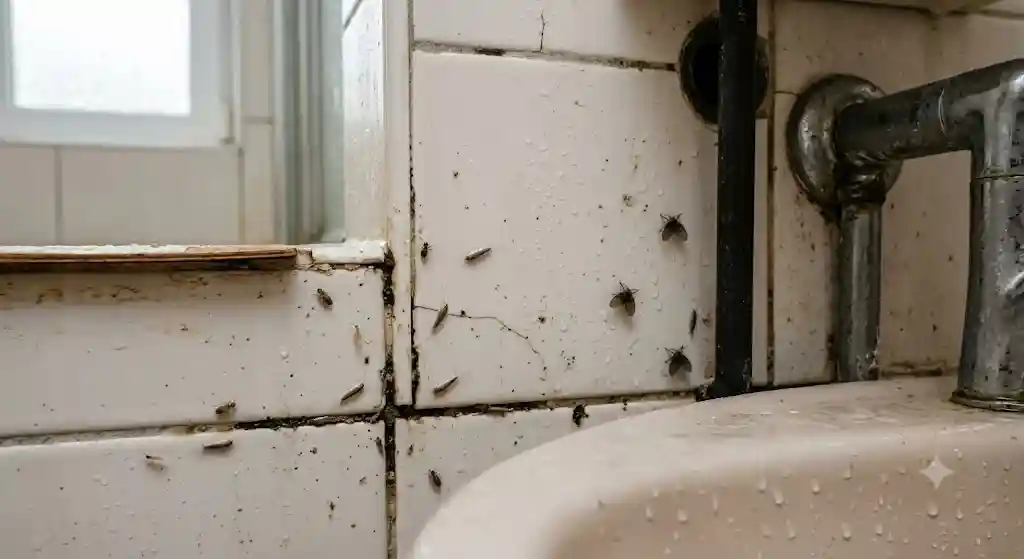
Finding small insects in your bathroom can be frustrating, whether they're crawling across the sink, flying around the drain, or appearing on the ceiling after a hot shower. Most bathroom bugs are attracted by moisture, humidity, standing water, soap scum, organic buildup, and hidden plumbing leaks.
What Are the Tiny Insects in My Bathroom?
Bathrooms create one of the most attractive environments for moisture-loving insects because they provide everything many pests need to survive: water, humidity, warmth, shelter, and organic food sources. Even a spotless bathroom can harbor hidden conditions such as biofilm inside drains, slow plumbing leaks, condensation behind walls, damp grout, or mold growth, making it an ideal habitat for small insects.
The insects you see are often only part of the problem. Many species spend most of their lives hidden inside wall voids, plumbing penetrations, drainpipes, under sink cabinets, behind baseboards, or beneath flooring, emerging only when searching for food, water, or breeding sites.
Some pests are merely nuisance insects, while others may signal underlying maintenance issues:
- Drain flies breed inside the slimy biofilm coating sink, shower, and floor drains.
- Silverfish thrive in humid bathrooms where they feed on paper fibers, wallpaper glue, mildew, and organic debris.
- Springtails gather around damp grout, leaking pipes, and areas with persistent moisture.
- Booklice (psocids) feed on microscopic mold growing on damp surfaces and stored paper products.
- Cockroach nymphs, particularly German cockroaches, hide near plumbing, cabinets, and warm, humid spaces, feeding on soap residue, hair, and organic matter.
- Ants, including moisture-loving species such as Pharaoh ants, may enter through tiny cracks while searching for water.
- Fungus gnats and sewer flies often appear where excess moisture allows fungi or organic buildup to develop.
- House spiders are usually predators that move into bathrooms because they find abundant insect prey.
- Centipedes prefer cool, damp hiding places and feed on other small insects, helping control pest populations naturally.
Why Bathrooms Attract Small Insects?
Several environmental conditions make bathrooms particularly attractive:
- High humidity from showers and baths
- Steam and condensation on walls, ceilings, and windows
- Standing water around sinks, tubs, and floor drains
- Slow plumbing leaks beneath sinks or behind walls
- Hair, soap scum, and organic debris inside drains
- Mold, mildew, and biofilm that serve as food sources for certain species
- Tiny cracks, crevices, and plumbing gaps that provide safe hiding places
- Poor ventilation caused by blocked or underused exhaust fans
These conditions often occur together, creating an environment where multiple insect species can thrive simultaneously.
Common Small Insects Found in Bathrooms
Bathrooms provide the perfect habitat for many moisture-loving insects because they offer everything pests need to survive, including high humidity, standing water, condensation, organic matter, mold, mildew, and dark hiding places. While some bathroom bugs are harmless nuisance pests, others may indicate hidden plumbing leaks, poor ventilation, or a growing infestation elsewhere in your home.
| Insect | Usually Found | Main Attraction | Risk Level |
|---|---|---|---|
| Silverfish | Walls, cabinets, baseboards | Humidity, mold, paper | Low |
| Drain Flies | Sink, shower, bathtub & floor drains | Biofilm, organic buildup | Low |
| Springtails | Wet floors, grout, leaking pipes | Moisture | Low |
| Cockroach Nymphs | Under sinks, behind toilets | Water, shelter, organic debris | High |
| Booklice | Damp cabinets, wallpaper | Mold and mildew | Low |
| Ants | Around plumbing & sinks | Water | Low |
| Fungus Gnats | Damp organic material | Fungi | Low |
| House Spiders | Ceilings, corners | Other insects | Beneficial |
| House Centipedes | Floors, baseboards | Hunting insects | Beneficial |
| Earwigs | Damp floor edges | Moisture | Low |
Below are the most common small insects found in bathrooms and what attracts them.
Silverfish
Silverfish are one of the most recognizable bathroom insects due to their silvery-gray scales and quick, fish-like movement. They prefer dark, humid environments where they feed on mold, mildew, wallpaper glue, paper products, cardboard, cotton fabrics, and organic debris.

You'll often find silverfish:
- Along baseboards
- Behind wallpaper
- Inside bathroom cabinets
- Under bath mats
- Around leaking plumbing
Their presence usually indicates excessive humidity rather than poor cleanliness.
Pestli
o Tip: If you regularly see silverfish, inspect your bathroom for hidden condensation, slow plumbing leaks, or poor ventilation instead of simply using insect sprays.
Drain Flies
Drain flies, also called moth flies or sewer flies, are tiny flying insects that breed inside the slimy biofilm coating sink, shower, bathtub, and floor drains.
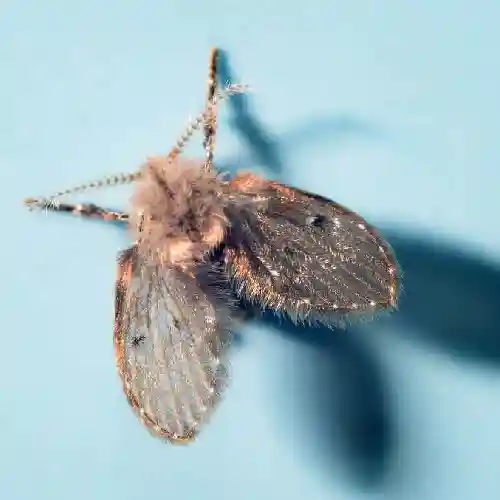
Their larvae feed on:
- Soap scum
- Hair buildup
- Organic sludge
- Bacteria
- Decaying organic matter
Adult drain flies usually rest on nearby walls, ceilings, mirrors, and around sink faucets, especially after a shower.
Springtails
Springtails are tiny insects commonly mistaken for fleas because they can jump when disturbed. Unlike fleas, they don't bite people or pets.
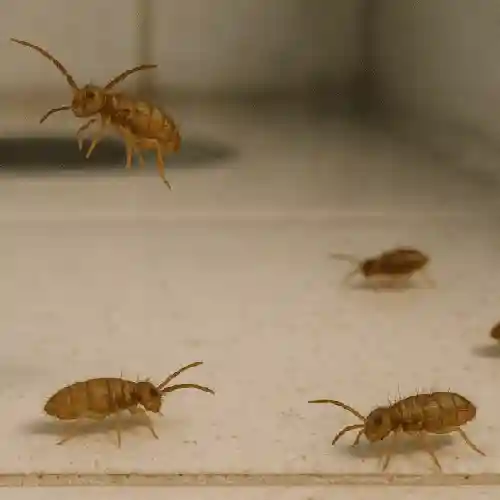
They thrive in:
- Wet tile grout
- Damp floors
- Leaking pipes
- Moldy areas
- Standing water
- Water-damaged wood
Large numbers of springtails almost always point to a moisture problem that should be corrected.
Cockroach Nymphs
Young German cockroaches frequently hide inside bathrooms because they need constant access to water.
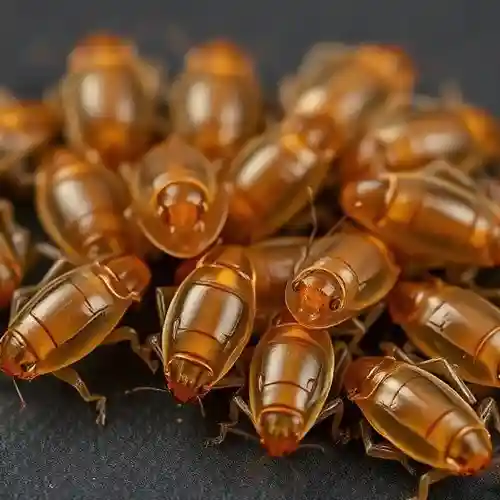
Common hiding places include:
- Under sink cabinets
- Behind toilets
- Wall voids
- Plumbing penetrations
- Cracks and crevices
- Around baseboards
They feed on hair, soap residue, food crumbs, and organic debris, making bathrooms an ideal shelter.
⚠ Warning: Seeing cockroach nymphs during the daytime often suggests a larger infestation that may require professional pest control.
Other Small Bathroom Insects
Depending on your home's conditions, you may also encounter:
- Booklice (Psocids) feeding on microscopic mold in damp cabinets and wallpaper.
- Ants, especially moisture-seeking species like Pharaoh ants, entering through tiny plumbing gaps.
- Fungus gnats breeding in damp organic material or nearby houseplants.
- House spiders hunting flying insects such as drain flies.
- House centipedes, which prey on cockroaches, silverfish, ants, and other insects.
- Earwigs hiding beneath bath mats or along damp baseboards.
Although many of these insects are harmless, repeated sightings often indicate excess moisture, hidden water leaks, poor ventilation, or structural gaps that should be addressed.
Tiny Insects Around the Bathroom Sink
The bathroom sink is one of the most common places to spot tiny insects because it provides everything moisture-loving pests need to survive—water, humidity, soap scum, hair, toothpaste residue, and hidden plumbing spaces. Even a clean sink can attract insects if there is biofilm inside the drain, condensation under the cabinet, or a slow pipe leak.
If you regularly notice insects crawling around your sink, don't ignore them. They're often a sign that moisture or organic buildup is creating an ideal breeding environment.
Drain Flies Around the Sink
If you see tiny fuzzy flies resting on the sink, faucet, mirror, or nearby wall, they're most likely drain flies. These insects don't breed on the sink surface—they reproduce inside the slimy biofilm lining the drainpipe.
Their larvae feed on:
- Soap scum
- Hair buildup
- Organic matter
- Bacteria
- Drain sludge
You'll usually notice adult flies becoming more active after running water or taking a shower.
Pest
lio Tip: Cleaning only the sink won't solve a drain fly problem. Remove the biofilm inside the drain pipe to eliminate both larvae and future generations.
Ants and Cockroach Nymphs Under the Sink
The cabinet beneath your sink provides a dark, warm, and humid hiding place for ants and German cockroach nymphs. Small plumbing leaks, condensation, and gaps around water pipes create the perfect shelter for these pests.
Watch for insects around:
- Water supply lines
- Drain pipes
- Pipe penetrations
- Cabinet corners
- Plumbing gaps
- Under stored cleaning supplies
Finding cockroach nymphs under the sink may indicate a larger infestation hiding inside wall voids or nearby rooms.
Booklice and Silverfish Near Damp Cabinets
Bathrooms with excessive humidity may also attract booklice and silverfish around vanity cabinets and storage areas.
These insects feed on materials commonly found in bathrooms, including:
- Mold
- Mildew
- Wallpaper paste
- Paper tissues
- Cardboard packaging
- Organic dust
Unlike cockroaches, they aren't attracted to leftover food but thrive where moisture allows mold to develop.
Small Bugs Coming Out of the Bathroom DrainIf you frequently notice small insects crawling or flying out of your bathroom drain, the drain itself is usually the source of the problem. Sink, shower, bathtub, and floor drains stay damp year-round, allowing biofilm, soap scum, hair, bacteria, and organic debris to build up inside the pipes. This creates an ideal breeding environment for several moisture-loving insects.
Ignoring these pests can lead to recurring infestations because many insects lay their eggs deep inside the drain system where surface cleaning can't reach.
Drain Flies Are the Most Common Drain Pest
Drain flies (moth flies or sewer flies) are the insects most commonly associated with bathroom drains. Their larvae develop inside the sticky biofilm that coats drainpipes, feeding on bacteria and decaying organic matter.
Common signs include:
- Tiny fuzzy flies around the drain
- Insects resting on nearby walls or ceilings
- More flies appearing after showers
- Slow-draining water with unpleasant odors
Because the breeding site is hidden inside the pipe, spraying adult flies rarely solves the problem.
Pestlio Tip: If drain flies return every few days, the biofilm inside the drain hasn't been completely removed. Scrubbing the drain walls is far more effective than simply pouring chemicals into the pipe.
Springtails Around Floor Drains
Tiny springtails often gather around floor drains, shower drains, and damp tile grout. Unlike drain flies, they don't breed inside the drain itself. Instead, they're attracted to the constant moisture, algae, mold, and mildew that develop around wet surfaces.
Springtails are commonly found near:
- Floor drains
- Shower corners
- Bathtub edges
- Wet grout lines
- Areas with standing water
Although harmless, large numbers usually indicate excessive moisture or a hidden plumbing issue.
Cockroach Nymphs and Other Hidden Drain Pests
Bathroom drains can also serve as entry points for German cockroach nymphs, particularly in apartments and older homes with shared plumbing systems. Small gaps around drainpipes and plumbing penetrations allow cockroaches to move between wall voids and bathrooms.
Other insects occasionally seen near drains include:
- Sewer flies
- Ants searching for water
- House centipedes hunting smaller insects
If multiple pest species are appearing around the same drain, it's often a sign of persistent moisture combined with structural entry points.
Small Insects on the Bathroom Floor
The bathroom floor is one of the easiest places to notice small insects because moisture tends to collect around toilets, showers, bathtubs, sinks, floor drains, grout lines, and baseboards. Wet tiles, condensation, and hidden plumbing leaks create ideal conditions for insects that prefer damp environments.
If insects repeatedly appear on your bathroom floor, the problem is often linked to excess humidity, standing water, poor ventilation, or moisture trapped beneath flooring rather than the floor itself.
Silverfish and Springtails
Silverfish and springtails are two of the most common crawling insects found on bathroom floors.
Silverfish usually hide:
- Under bath mats
- Along baseboards
- Between tile grout
- Behind the toilet
- Near damp corners
Springtails prefer areas with constant moisture and are commonly seen around:
- Wet tiles
- Floor drains
- Shower entrances
- Leaking toilets
- Damp grout lines
While silverfish feed on mold, mildew, paper fibers, and organic debris, springtails primarily feed on microscopic fungi and algae growing in moist areas.
Pestlio Tip: Large numbers of springtails usually indicate a hidden moisture problem rather than an insect infestation alone.
Cockroach Nymphs and Earwigs
If you notice small brown insects running across the bathroom floor at night, they may be German cockroach nymphs. These young cockroaches travel along walls and baseboards while searching for water and shelter.
Bathrooms may also attract earwigs, especially if moisture remains trapped around:
- Baseboards
- Bath mats
- Toilet bases
- Floor edges
- Door thresholds
Although earwigs are mostly harmless, their presence often indicates excessive dampness that should be corrected.
House Centipedes Hunting on the Floor
Finding a house centipede on the bathroom floor can be alarming, but these fast-moving predators are actually feeding on other insects.
House centipedes commonly hunt:
- Silverfish
- Cockroach nymphs
- Ants
- Booklice
- Drain flies
- Springtails
Seeing centipedes usually means another insect population is already established nearby.
Tiny Bugs on the Bathroom Ceiling
Finding tiny bugs on your bathroom ceiling can be surprising, especially when the rest of the room appears clean. In most cases, insects gather near the ceiling because warm air, steam, condensation, humidity, and light fixtures create a comfortable resting place after they emerge from drains or hidden wall spaces.
Rather than nesting on the ceiling itself, these insects are usually responding to the moisture-rich environment below.
Drain Flies and Fungus Gnats
Drain flies are the insects most commonly seen resting on bathroom ceilings. After breeding inside sink drains, shower drains, or bathtub drains, adult flies often settle on nearby ceilings and walls because they are weak fliers that stay close to their breeding sites.
Fungus gnats may also appear if excessive moisture encourages fungal growth around nearby houseplants, water-damaged wood, or damp organic material.
Common signs include:
- Tiny flies resting near ceiling corners
- Insects gathering around bathroom lights
- Increased activity after hot showers
- Flies returning even after being swatted
Pestlio Tip: If flies are always found on the ceiling, inspect the drains first. The ceiling is usually their resting place—not where the infestation begins.
House Spiders Hunting Flying Insects
Bathrooms often attract house spiders because they provide a steady supply of flying insects. Ceiling corners, light fixtures, window frames, and exhaust fan areas are ideal places for spiders to build webs and catch drain flies, fungus gnats, and other small insects.
If you're seeing more spiders than usual, they're often responding to an existing insect population rather than creating the problem themselves.
Condensation and Hidden Moisture
Persistent condensation on the ceiling can attract moisture-loving pests while also encouraging mold and mildew growth. Bathrooms with poor ventilation may develop damp areas around:
- Ceiling corners
- Exhaust fans
- Light fixtures
- Skylights
- Air vents
These conditions create an environment where insects can remain active even after routine cleaning.
Small Bugs on Bathroom Walls
If you notice small insects crawling on your bathroom walls, they're usually searching for moisture, shelter, or a place to rest. Bathroom walls often develop condensation after showers, while tiny cracks, crevices, wallpaper edges, and wall voids provide safe hiding places for moisture-loving pests.
Many insects seen on walls actually originate from nearby drains, plumbing, or cabinets, making the wall a temporary resting spot rather than their permanent home.
Silverfish and Booklice
Silverfish and booklice (psocids) are among the most common insects found on bathroom walls, especially in older or poorly ventilated bathrooms.
Silverfish are attracted to:
- Damp wallpaper
- Wallpaper glue
- Mold and mildew
- Humid wall corners
- Dark cracks behind baseboards
Booklice feed on microscopic mold growing on painted walls, wallpaper, and damp surfaces. Although they don't bite or damage your home, they usually indicate excessive humidity and poor airflow.
Pestlio Tip: If booklice are appearing on your bathroom walls, focus on removing the moisture and mold rather than treating the insects themselves.
Drain Flies Resting on Walls
Adult drain flies often rest on bathroom walls after emerging from sink, shower, or bathtub drains. Since they're weak fliers, they stay close to their breeding site and are commonly found near mirrors, sinks, and shower walls.
You may notice:
- Tiny fuzzy flies sitting still on walls
- More activity after running water
- Clusters near sinks or showers
- Flies returning after being removed
These insects usually disappear once the drain biofilm is completely cleaned.
Spiders and Hidden Entry Points
Bathroom walls also attract house spiders, which hunt smaller insects such as drain flies, ants, and fungus gnats. They commonly build webs in quiet corners, behind mirrors, around windows, or near ceiling edges.
If spiders appear frequently, inspect your walls for:
- Cracks and crevices
- Gaps around plumbing pipes
- Loose caulking
- Open wall penetrations
- Hidden moisture damage
These openings allow insects to enter while providing spiders with access to prey.
How to Get Rid of Small Bathroom Insects?
Eliminating small bathroom insects requires addressing the conditions that attract them rather than simply spraying the visible bugs. Most insects, including drain flies, silverfish, springtails, booklice, cockroach nymphs, ants, fungus gnats, earwigs, and house centipedes, thrive because of high humidity, standing water, drain biofilm, mold, mildew, plumbing leaks, and hidden entry points. A combination of proper sanitation, moisture control, and targeted treatment provides the most effective long-term solution.
1. Eliminate Moisture Sources
Moisture is the primary reason insects invade bathrooms. Keeping the area dry makes it much less attractive to pests.
- Repair leaking faucets, showerheads, toilets, and plumbing pipes.
- Remove standing water around the sink, bathtub, shower, and floor drain.
- Run the bathroom exhaust fan during and for at least 20 minutes after showers.
- Use a dehumidifier if humidity remains high.
- Wipe condensation from walls, mirrors, windows, and ceilings.
2. Clean Drains and Remove Biofilm
Bathroom drains are common breeding sites for drain flies and other moisture-loving insects because they collect organic debris over time.
Regularly clean:
- Sink drains
- Shower drains
- Bathtub drains
- Floor drains
Remove:
- Biofilm
- Soap scum
- Hair buildup
- Organic sludge
- Bacteria
- Decaying organic matter
Keeping drains clean interrupts the insect life cycle and prevents new generations from developing.
Pestlio Expert Guide: If drain flies keep returning, the problem is usually the biofilm inside the drainpipe—not the adult flies you see.
3. Remove Mold, Mildew, and Organic Debris
Many insects feed on microscopic fungi or thrive where organic matter accumulates.
Focus on cleaning:
- Tile grout
- Bathroom walls
- Ceiling corners
- Under sink cabinets
- Behind toilets
- Around baseboards
- Shower curtains
- Bath mats
Removing mold, mildew, soap residue, and organic buildup helps eliminate food sources for booklice, silverfish, springtails, and fungus gnats.
4. Seal Entry Points
Some bathroom insects enter through tiny structural openings instead of breeding indoors.
Inspect and seal:
- Cracks and crevices
- Pipe penetrations
- Plumbing gaps
- Baseboards
- Window frames
- Door gaps
- Loose caulking
Sealing these areas helps prevent ants, cockroach nymphs, earwigs, and spiders from entering your bathroom.
5. Use Targeted Pest Control Methods
After removing moisture and breeding sites, use treatments only where they're needed.
Effective options include:
- Sticky monitoring traps
- Drain cleaning brushes
- Gel baits for cockroaches and ants
- Residual insecticides (when appropriate)
- Insect Growth Regulators (IGRs) for recurring infestations
- Integrated Pest Management (IPM) for long-term prevention
Avoid relying solely on aerosol sprays, as they rarely eliminate hidden nests or breeding areas.
6. Monitor and Maintain Your Bathroom
Prevent insects from returning by inspecting your bathroom every few weeks.
Look for:
- New plumbing leaks
- Slow-draining water
- Damp cabinets
- Standing water
- Mold or mildew
- Recurring insect activity
- Musty odors
Regular maintenance helps detect problems early before they develop into larger infestations.
Pestlio Expert Guide: The most effective bathroom insect control combines moisture management, drain maintenance, sanitation, exclusion, and targeted treatments. By eliminating the source of the infestation—not just the insects—you'll achieve long-lasting, pest-free results.
When to Call a Pest Control Professional?
Most small bathroom insect problems can be resolved by improving sanitation, reducing moisture, and maintaining clean drains. However, if insects continue to appear despite your efforts, the issue may involve hidden plumbing leaks, wall voids, structural moisture, or an established infestation that requires professional treatment.
Signs You Need Professional Pest Control
If you notice any of the following, it's time to schedule a professional inspection:
- Drain flies returning after repeated drain cleaning.
- Large numbers of silverfish, springtails, or booklice appearing every day.
- Cockroach nymphs seen during the daytime.
- Insects spreading from the bathroom to other rooms.
- Persistent musty odors caused by hidden mold or mildew.
- Evidence of water damage or leaking plumbing behind walls.
- DIY treatments providing only temporary results.
Pestlio Expert Guide: Seeing a few insects occasionally is normal, but recurring activity usually indicates an underlying moisture or structural issue that needs professional attention.