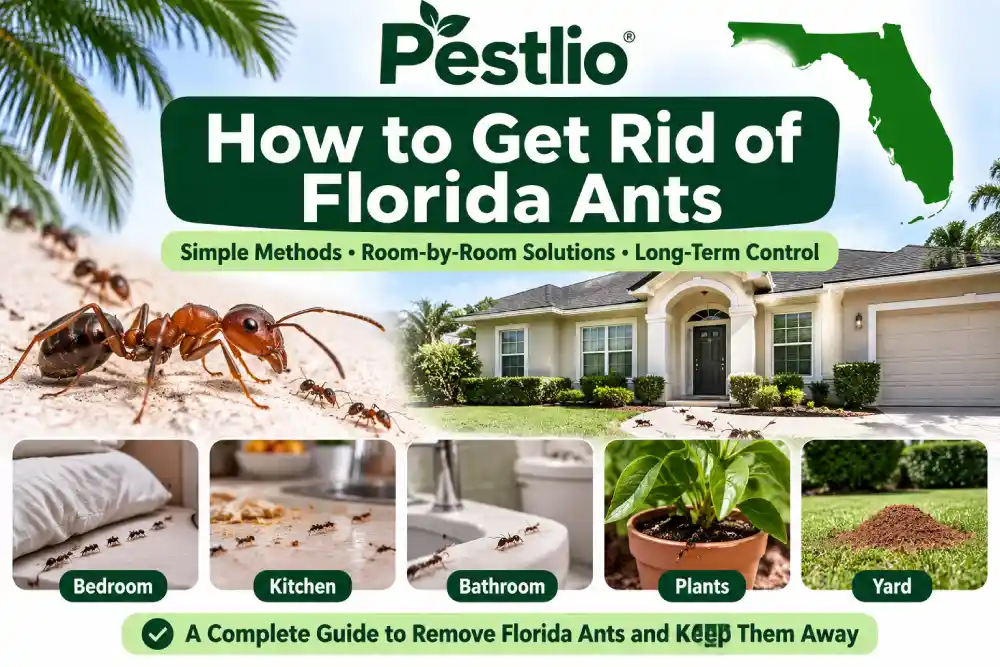
The best way to get rid of ants in Florida is to identify the ant species first, find where it is nesting or entering the home, remove food and moisture sources, and then use the appropriate treatment for that species. Florida homes commonly encounter ghost ants, Florida carpenter ants, fire ants, Argentine ants, pavement ants, crazy ants, little black ants, Pharaoh ants, and other species.
For a quick reduction, remove accessible food and water, clean ant trails, and block obvious entry points. For long-term control, you need to address the colony or nesting site rather than simply killing the worker ants you see. Ant bait can be useful for many household species because foraging workers can carry suitable bait back to the colony.
The right approach also depends on where the ants are found. Ants in a kitchen are often searching for food and water; ants in a bathroom may be associated with moisture or plumbing; ants in a bedroom may be entering through windows, walls, or baseboards; and ants around plants or the yard may be connected to outdoor nests or honeydew-producing insects.
The Florida Ant Control Process
1. Identify the ant
→ 2. Inspect the trail and nesting area
→ 3. Remove food, water, and shelter
→ 4. Treat the colony or active trail
→ 5. Seal entry points
→ 6. Prevent the conditions that attract ants
Important: Getting rid of ants overnight and getting rid of the colony permanently are not the same thing. You can reduce visible activity quickly, but lasting control requires finding and addressing the source.
Common Types of Ants in Florida, USA
Florida has a wide variety of ant species, and several can become household pests. Correct identification matters because a tiny ghost ant, a large carpenter ant, and a fire ant do not require the same control strategy.
Florida Carpenter Ant
Scientific name: Camponotus floridanus
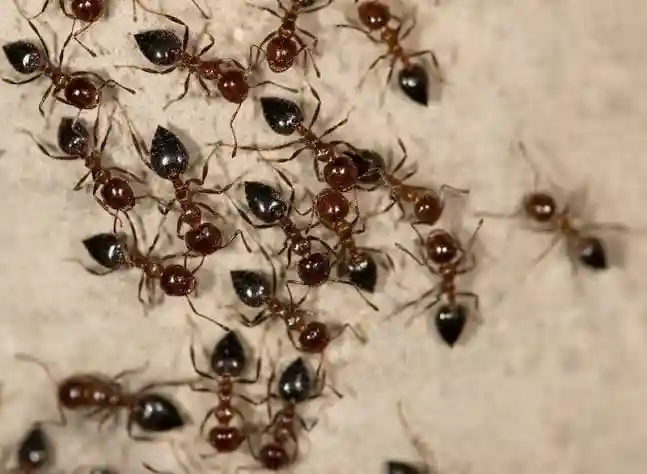
Florida carpenter ants are among the larger ants found around homes. They are commonly black with reddish or yellowish areas on the thorax.
They may nest in:
- Moist or damaged wood
- Wall voids
- Tree cavities
- Stumps and logs
- Roof areas
- Around plumbing leaks
Carpenter ants do not eat wood like termites. They excavate wood to create nesting galleries.
Signs to Watch For
- Large ants repeatedly appearing indoors
- Fine wood debris near nesting areas
- Ants emerging from walls or ceilings
- Activity around water-damaged wood
- Winged ants appearing inside the house
If carpenter ants are involved, treating the visible workers without addressing moisture or damaged wood may not solve the problem.
Ghost Ants
Scientific name: Tapinoma melanocephalum
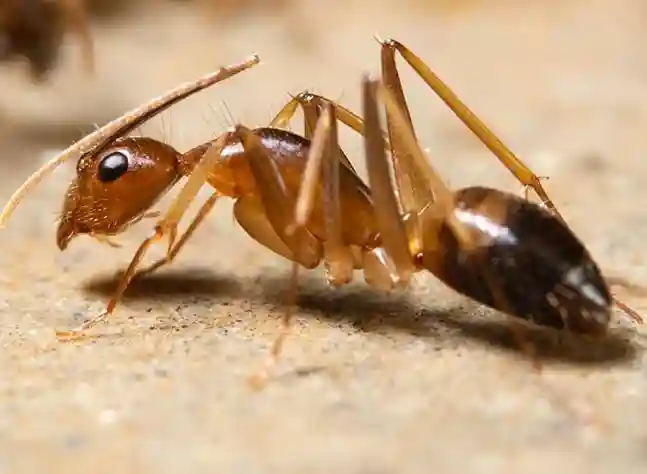
Ghost ants are extremely small and particularly important for Florida homeowners.
They typically have:
- A dark head
- Pale or translucent abdomen
- Pale legs
- Very small workers
- Fast-moving trails
They commonly appear in:
- Kitchens
- Bathrooms
- Around sinks
- Cabinets
- Countertops
- Wall voids
- Houseplants
Why Ghost Ants Enter Homes?
Ghost ants are strongly associated with food and moisture. Florida's warm, humid conditions can make homes particularly suitable for them.
If you see a continuous trail of tiny ants around your sink or bathroom, ghost ants should be one of the species considered.
Red Imported Fire Ants
Scientific name: Solenopsis invicta
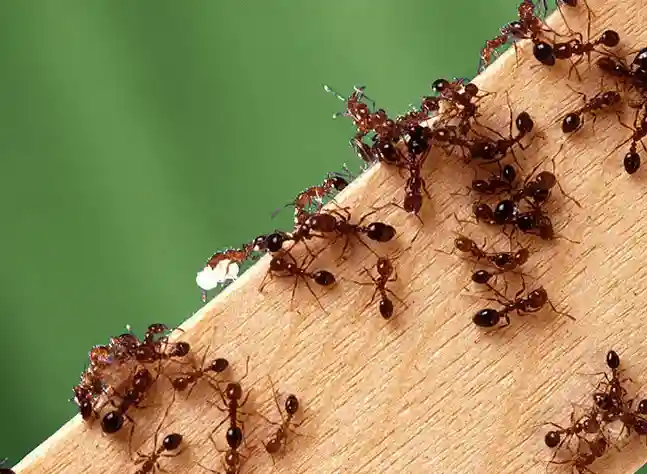
Fire ants are primarily an outdoor pest, but their nests can occur close to homes, sidewalks, driveways, patios, and foundations.
They are recognized by:
- Reddish-brown workers
- Darker abdomen
- Different worker sizes
- Visible outdoor mounds
- Aggressive defensive behavior
Why Fire Ants Matter?
Unlike most nuisance household ants, fire ants can sting repeatedly, making them a particular concern around:
- Lawns
- Play areas
- Pools
- Patios
- Driveways
- Gardens
Their activity can also change after heavy rain or flooding as colonies respond to changing soil and moisture conditions.
Argentine Ants
Scientific name: Linepithema humile
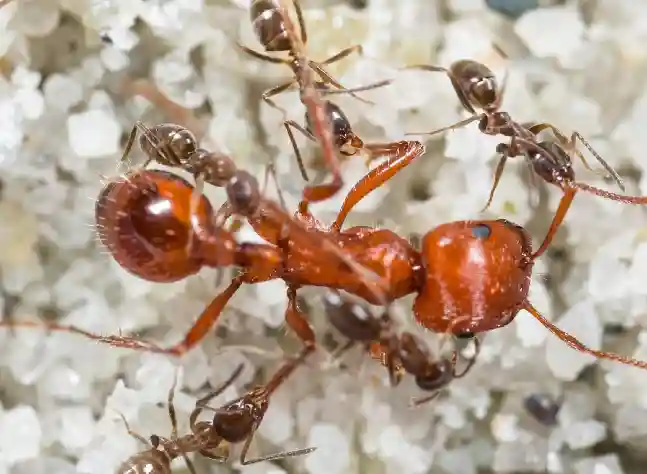
Argentine ants are small brown ants that can create long, highly visible trails between outdoor nesting areas and food or water sources.
Look for them around:
- Kitchens
- Sinks
- Gardens
- Trees
- Foundation edges
- Food storage areas
Their extensive colonies mean that treating only one indoor trail may provide temporary results.
Tawny Crazy Ants
Scientific name: Nylanderia fulva
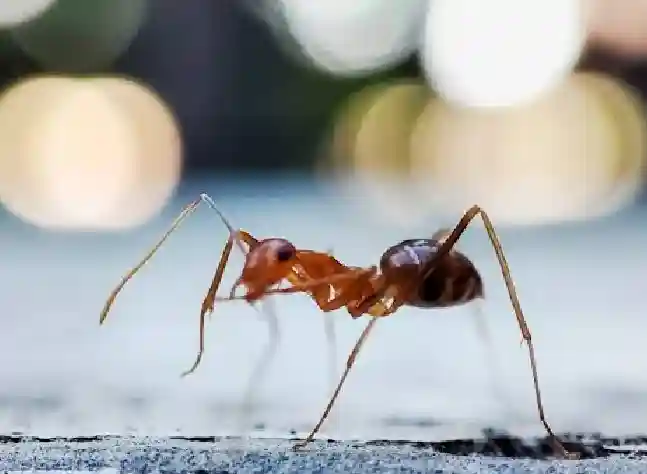
Tawny crazy ants are known for their rapid, erratic movement, which gives them their common name.
They may occur around:
- Landscaped areas
- Mulch
- Buildings
- Electrical equipment
- Outdoor structures
Large populations can create significant nuisance problems around Florida properties.
Big-Headed Ants
Genus: Pheidole
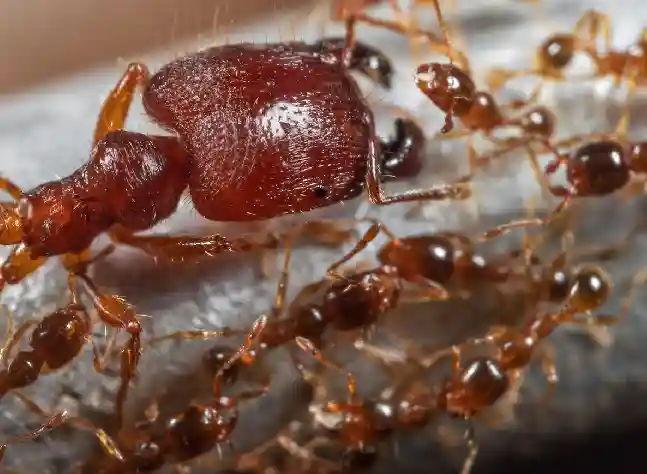
Big-headed ants have noticeably different worker forms. Some workers have disproportionately large heads and powerful mandibles.
They commonly nest in:
- Soil
- Mulch
- Landscaping
- Around foundations
- Beneath objects on the ground
They can enter homes while foraging for food.
Pharaoh Ants
Scientific name: Monomorium pharaonis
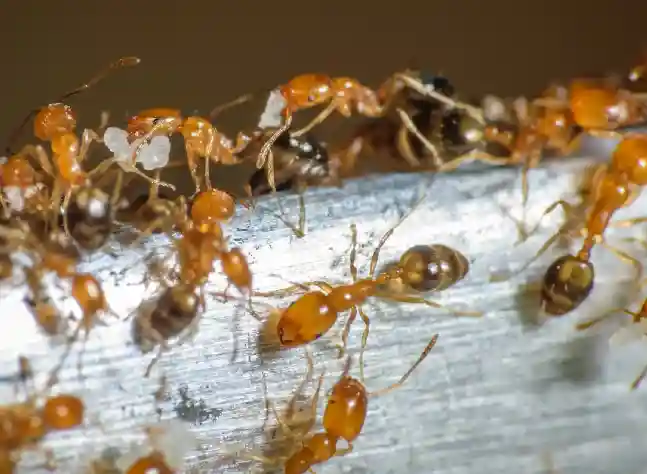
Pharaoh ants are extremely small and are usually yellowish to reddish.
They are particularly associated with warm indoor environments and can be difficult to eliminate once established.
They may occur in:
- Apartments
- Hotels
- Kitchens
- Bathrooms
- Wall voids
- Commercial buildings
Because improper treatment can cause colonies to relocate, identification and colony-focused control are especially important with this species.
Pavement Ants
Genus: Tetramorium
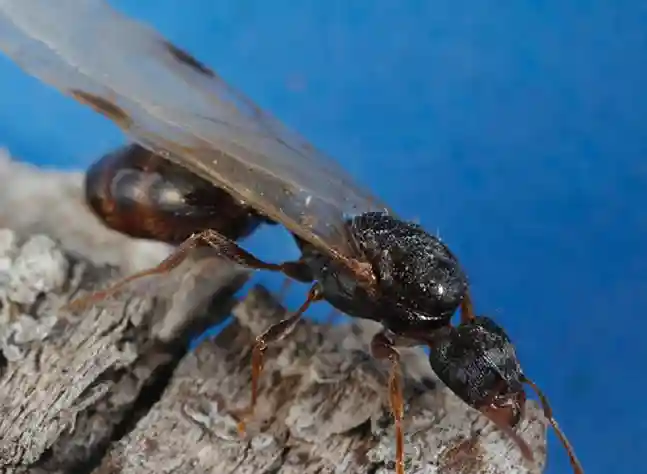
Pavement ants are small, dark ants commonly associated with:
- Sidewalks
- Driveways
- Foundation edges
- Pavement cracks
- Soil
- Landscaping
They may enter homes through small gaps while searching for food.
Other Florida Ants
Other species that may be encountered include:
- Little black ants
- White-footed ants
- Acrobat ants
- Field ants
- Rover ants
- Little fire ants
Because several Florida ants can look similar at a glance, size, color, behavior, location, and nesting conditions should all be considered before treatment.
How to Identify Ants in Florida?
Before trying to get rid of an ant infestation, look beyond its color.
Check these five characteristics:
| Identification Clue | What to Look For |
|---|---|
| Size | Tiny, small, medium, or large |
| Color | Black, brown, red, yellowish, or two-toned |
| Body shape | Head, thorax, abdomen and waist |
| Behavior | Fast-moving, trailing, swarming, biting or stinging |
| Location | Kitchen, bathroom, bedroom, plant, wall, foundation or yard |
Location Can Be a Major Clue
- Tiny ants around a bathroom sink: investigate moisture and plumbing.
- Tiny ants around sugar in the kitchen: investigate food sources.
- Large ants emerging from damp wood: investigate carpenter ants.
- Ant mounds in the lawn: investigate fire ants or other outdoor species.
- Ants around plants: inspect both the soil and the plant for insects producing honeydew.
How to Inspect Your Florida Home for Ants?
Before applying any ant treatment, inspect where the ants are traveling, what they are attracted to, and where they may be entering or nesting. A good inspection prevents you from treating the wrong room or killing only the visible workers while the colony remains active.
The goal is to trace the problem from:
Ant trail → Entry point → Food/water source → Nesting area
Follow the Ant Trail
When you see several ants moving in a line, don't immediately wipe them away.
Watch the trail for several minutes and determine:
- Where the ants are coming from
- Where they are going
- Where they disappear
- Whether they enter a crack or wall
- Whether the trail leads to food or water
- Whether they came from outside
Ant trails commonly follow baseboards, cabinet edges, plumbing, windows, and wall corners.
Look for the Entry Point
Common entry points include:
- Cracks around windows
- Gaps beneath doors
- Foundation cracks
- Pipe openings
- Utility lines
- Wall penetrations
- Damaged screens
- Gaps around cabinets
Once the entry point is identified, you can address the route instead of treating the entire room.
Create a Simple Ant Inspection Map
For recurring infestations, map the activity rather than treating randomly.
| Area | Ant Activity | Possible Source | Action |
|---|---|---|---|
| Kitchen sink | High | Food/water | Inspect plumbing |
| Bathroom | Medium | Moisture | Check leaks |
| Bedroom window | Low | Entry point | Seal gap |
| Houseplant | High | Honeydew/soil | Inspect plant |
| Foundation | High | Outdoor nest | Locate colony |
| Wall | High | Possible nest | Further inspection |
This makes it easier to determine whether you're dealing with one colony with multiple trails or several separate colonies.
How to Get Rid of Florida Ants Natural Ways?
Once you know what type of ant you're dealing with, focus on removing what attracts them, disrupting their route, and controlling the colony. Start with simple natural methods, then use targeted treatment if the infestation persists.
1. Remove Food Sources
- Clean crumbs and spills immediately.
- Store sweets, fruit, and pet food in sealed containers.
- Keep counters, floors, and trash areas clean.
2. Eliminate Moisture
- Fix leaking faucets and pipes.
- Dry sinks and bathroom surfaces.
- Correct standing water and irrigation leaks.
- Improve bathroom ventilation.
3. Clean Ant Trails
Wipe active trails from counters, floors, walls, and baseboards to remove the pheromone trail that guides other ants.
4. Seal Entry Points
Check and seal gaps around:
- Windows and doors
- Pipes and utility lines
- Baseboards
- Foundation cracks
5. Manage the Yard
Keep mulch, firewood, vegetation, and damp debris away from the house. Trim branches that touch the structure.
6. Check Plants
If ants are climbing plants, look for aphids, scale, mealybugs, or other honeydew-producing insects.
Natural methods work best for preventing and reducing activity. A persistent colony may require targeted baiting or professional treatment.
How to Get Rid of Ants in the Kitchen?
The kitchen is usually the easiest place for ants to find food and water, so start by removing both.
Effective Method
- Remove the attraction: Clean crumbs, sugar, grease, spills, and pet food.
- Clean the trail: Wipe countertops, cabinet edges, and floors to remove the ants' pheromone trail.
- Find the entry point: Follow the trail around the sink, cabinets, windows, appliances, and plumbing openings.
- Check for moisture: Inspect under the sink and around the dishwasher for leaks.
- Use ant bait if activity continues: Place suitable bait beside an active trail so workers can carry it back toward the colony.
- Seal the entry point: Once you've identified the route, close appropriate gaps around pipes, windows, and cabinets.
Best approach: Remove food → follow the trail → bait the colony → seal the route.
How to Get Rid of Ants in the Bathroom?
Bathroom ants are often associated with water, humidity, plumbing, or damp areas. This is especially important in Florida's warm, humid environment.
Effective Method
- Find the trail: Check around the sink, toilet, tub, shower, and baseboards.
- Inspect plumbing: Look under the sink and around toilet and shower connections for leaks.
- Remove moisture: Dry wet surfaces and improve bathroom ventilation.
- Clean the trail: Wipe the route where ants are traveling.
- Check entry points: Inspect gaps around pipes, walls, cabinets, and baseboards.
- Use targeted bait if needed: Place appropriate ant bait near active trails rather than randomly spraying the room.
- Seal the route: After identifying the entry point, seal suitable gaps.
Best approach: Find moisture → fix the leak → follow the trail → treat the colony → seal the entry point.
If ants repeatedly emerge from a wall or plumbing area after moisture problems have been corrected, the colony may be hidden inside a wall void and deserves closer inspection.
How to Get Rid of Ants in the Bedroom?
Ants in bedrooms are often entering through windows, baseboards, wall gaps, plants, or adjoining rooms rather than nesting beside the bed.
Effective Method
- Follow the ants: Watch where they disappear—usually along a baseboard, window, door, or wall.
- Remove food: Don't leave snacks, sweet drinks, or pet food exposed.
- Check windows: Inspect screens, frames, and exterior gaps.
- Inspect plants: Look for aphids, scale, mealybugs, or other insects producing honeydew.
- Clean the trail: Remove the pheromone route from floors and baseboards.
- Use targeted bait: If ants remain active, place suitable bait near the established trail.
- Seal the entry point: Close gaps around windows, doors, baseboards, or utility openings.
Best approach: Follow the trail → remove food → check windows/plants → bait if needed → seal the entry route.
How to Get Rid of Ants in Houseplants?
Ants climbing a plant may not be feeding on the plant itself. They may be attracted to honeydew-producing insects or damp soil.
Quick Method
- Check leaves and stems for aphids, scale, mealybugs, or whiteflies.
- Check whether the soil stays constantly wet.
- Remove dead plant material.
- Correct drainage and watering problems.
- Inspect nearby pots for ant activity.
- Treat the underlying plant pest rather than only killing the ants.
Key point: If ants are farming honeydew-producing insects, removing the ants without addressing those insects can allow the problem to return.
Need Ant Control in Florida? Get Professional Help
If ants are appearing throughout your Florida home, returning after DIY treatment, or coming from walls, plumbing, or other hidden areas, professional inspection can save time and prevent repeated treatments. Florida has many pest-ant species, and proper identification matters because different ants can require different control strategies. UF/IFAS also recommends an integrated approach that includes sanitation, exclusion, moisture reduction, and removal of potential nesting sites.
When to Call Pestlio?
Contact the Pestlio pest control team when you notice:
- Ants returning repeatedly after DIY treatment
- Large numbers of ants inside the home
- Large carpenter ants around walls, ceilings, or damp wood
- Ants appearing in multiple rooms
- Ant trails coming from plumbing or wall voids
- Winged ants indoors
- Fire-ant mounds around areas used by children or pets
- Ant activity that continues despite cleaning and exclusion
What Pestlio Can Help With?
Our ant-control approach can include:
1. Ant Identification
Determine the likely species and understand its behavior.
2. Property Inspection
Trace trails, entry points, moisture sources, nesting areas, and outdoor activity.
3. Targeted Ant Treatment
Select an appropriate treatment strategy based on the species and infestation rather than treating every ant the same way.
4. Indoor & Outdoor Control
Address ants in kitchens, bathrooms, bedrooms, living areas, plants, foundations, yards, and other active locations.
5. Entry-Point & Prevention Advice
Identify gaps, moisture problems, landscaping conditions, and other factors that can encourage ants to return.
Florida Locations We Cover for Ant Treatment
Pestlio provides ant-control services across these Florida locations:
| Florida Service Area | Ant Treatment Available |
|---|---|
| Cape Coral | ✓ |
| Fort Lauderdale | ✓ |
| Hialeah | ✓ |
| Jacksonville | ✓ |
| Miami | ✓ |
| Orlando | ✓ |
| Port St. Lucie | ✓ |
| St. Petersburg | ✓ |
| Tallahassee | ✓ |
| Tampa | ✓ |
| Florida – Statewide Service Area | ✓ |
Cities We Currently Cover
Cape Coral • Fort Lauderdale • Hialeah • Jacksonville • Miami • Orlando • Port St. Lucie • St. Petersburg • Tallahassee • Tampa
For customers outside these listed cities, availability can depend on the exact location and service requirements.